
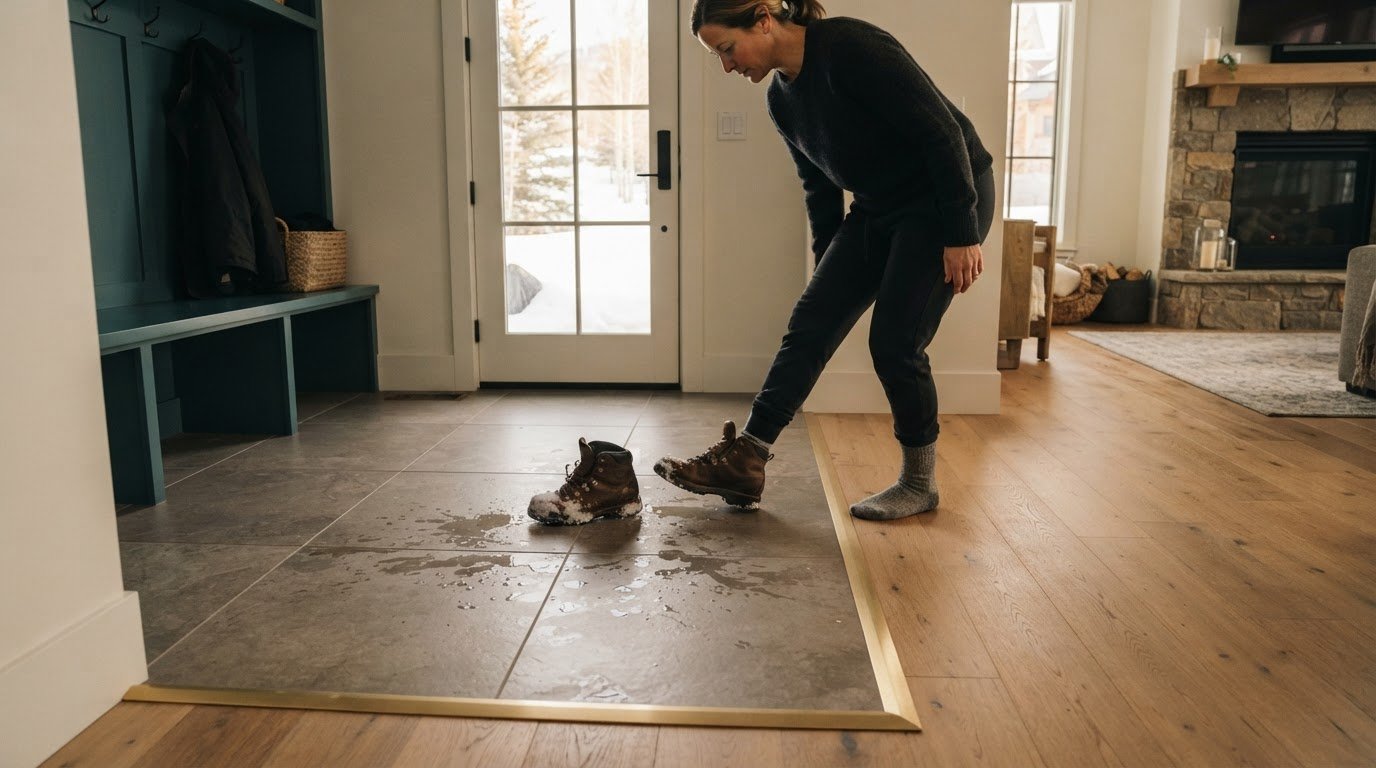
The most striking floor isn’t always the most practical choice for every room. Choosing the right flooring for a high-end home means balancing the look you want with everyday demands: hardwood brings natural warmth, while porcelain and stone offer hard-wearing surfaces, and softer options add comfort underfoot. The right material depends on how each space is used, how much upkeep suits your routine, and the atmosphere you want to create.
It’s natural to focus first on color, grain, and finish, since flooring shapes an interior from the moment you enter. This guide explains how material, durability, maintenance, comfort, and budget fit with styles ranging from quietly contemporary to richly traditional. Details such as plank width, tile scale, and pattern also affect how rooms flow together, helping you create a cohesive home rather than choosing beautiful finishes in isolation.
Key Takeaways
- Compare hardwood, tile, carpet, and luxury vinyl by the atmosphere you want and the demands of each room.
- Balance durability, upkeep, comfort, and budget against household activity to make a choice that works beyond its first impression.
- Use engineered hardwood’s construction, wear layer, and pattern options to shape both long-term performance and visual character.
- Coordinate flooring material and color with your interior style to create a more cohesive sense of flow throughout the home.
1. What Are the Top Flooring Options for Luxury Home Renovations?
Hardwood brings natural grain and warmth to living rooms, while reclaimed boards add marks that tell a story. Engineered hardwood pairs a real-wood surface with a layered core, making it a practical consideration for radiant-heating systems. Carpet offers a softer, quieter surface for bedrooms, where plush texture can complement an intimate palette. In kitchens, porcelain, stone, and luxury vinyl often suit the practical demands of daily use.
Hardwood has distinctive grain, natural stone shows individual veining, and porcelain can reproduce marble or concrete with a more consistent pattern. Luxury vinyl planks imitate wood or stone and offer a surface designed to resist stains, scratches, and water. Tile suits busy rooms and spills; stone offers enduring variation but needs sealing and careful upkeep.
Designer ceramic tile creates character through color, surface, and arrangement. Textured finishes and decorative patterns can define a kitchen backsplash area of flooring or add detail in an entry, while herringbone layouts bring movement to wood, stone, or porcelain. Large-format porcelain creates fewer visible grout lines and can echo marble across an open-plan living area. Its scale calls for careful layout and subfloor preparation.
Porcelain is denser and less porous than standard ceramic, making it a strong option for moisture-prone kitchens and bathrooms. It also works with radiant heating, which can make a tiled surface more comfortable underfoot. Luxury vinyl tile and planks offer another versatile choice: tile formats can suggest stone, while planks evoke wood and feel softer than hard tile. For vinyl, compare product warranties, look for indoor-air-quality certifications, and follow the manufacturer’s installation instructions, including subfloor preparation.
Flooring can influence a home’s resale appeal, but the material alone doesn’t determine an appraisal. Well-installed hardwood may appeal to buyers who value natural materials; condition, finish, and how consistently the flooring suits the home also shape its impression.
2. Durability, maintenance, comfort, and budget
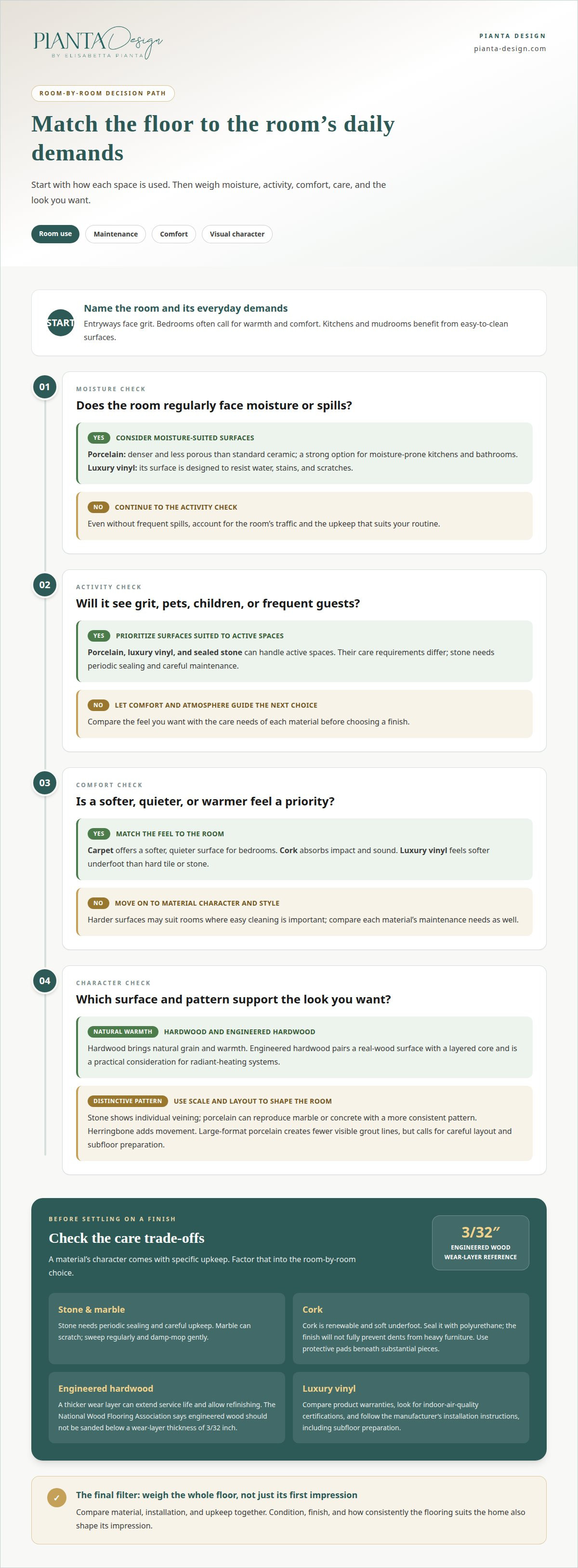
Start with each room’s daily demands: entryways face grit, while bedrooms call for comfort. In busy areas, choose flooring suited to pets, children, and frequent guests. Porcelain, luxury vinyl, and sealed stone can handle active spaces, but each has different care requirements. A thoughtful space plan can also place harder-wearing surfaces where activity is greatest.
Natural stone develops distinctive character, yet it needs periodic sealing and careful maintenance. Honed or textured finishes can reduce slipperiness and make wear less conspicuous. Marble rewards gentle care: sweep regularly and damp-mop, while remembering its surface can scratch. Cork offers a softer, sound-absorbing feel and is renewable; seal it with polyurethane. That finish won’t fully prevent dents from heavy furniture, so use protective pads beneath substantial pieces.
Comfort depends on more than surface softness. Cork absorbs impact, while luxury vinyl feels softer underfoot than stone or tile. Bedrooms often benefit from warmer flooring, whereas kitchens and mudrooms call for easy-to-clean surfaces. These room-by-room choices help balance elegance, maintenance, and durability throughout the home.
Installed flooring costs vary by material. Compare material, installation, and upkeep together rather than judging by the initial cost alone. For example, a stone floor’s sealing needs add ongoing care to its distinctive finish.
To balance long-term comfort and practicality, map each room’s use, desired feel, and maintenance needs before selecting finishes. This room-by-room approach clarifies where natural stone’s elegance suits the home and where resilient, simpler-care flooring makes more sense.
3. How to Choose Flooring That Complements Your Interior Design Style?
Engineered hardwood pairs a genuine wood surface with a stable layered core. This construction can limit expansion and contraction from heat and dryness. It suits interiors where homeowners want hardwood’s timeless character alongside greater dimensional stability. In living spaces, it can bridge traditional detailing and clean, contemporary lines while preserving the grain’s natural presence.
Wear-layer thickness affects refinishing potential and the floor’s future. A thicker layer can extend service life and allow refinishing. The National Wood Flooring Association says engineered wood shouldn’t be sanded below a wear-layer thickness of 3/32 inch. Consider this specification alongside room function, especially where chairs, pets, or frequent foot traffic may mark the finish.
Wide-plank hardwood creates visual continuity with fewer seams than narrower boards. European oak offers a defined grain, walnut brings deeper color, and select maple species suit a quieter palette. Choose a finish to support the room’s character: matte feels understated, while a more reflective surface emphasizes light. Compare samples beside concrete, textiles, and cabinetry before settling on the interior palette.
Patterns give hardwood a more tailored presence. Herringbone creates a rhythmic field, while chevron forms a continuous directional point. Bespoke inlays can frame a threshold or define a transition between living areas. These designs also work in stone or porcelain, connecting rooms with different functional needs.
Environmental and indoor-air considerations start with material sourcing and product information. FSC or Cradle to Cradle labels indicate verification of responsible sourcing and manufacturing standards. For exotic hardwood, sourcing through companies within the Forest Stewardship Council and Sustainable Forestry Initiative helps avoid illegally harvested wood. Bamboo, cork, and eco-friendly composite materials are other sustainable flooring options. For luxury vinyl plank, choose products with industry certifications for indoor air quality. Together, these checks help align a floor’s material character with the home’s values and atmosphere.
4. Matching flooring materials and colors to design styles
A useful framework for choosing the right flooring for a high-end home starts with the architecture, cabinetry, wall color, and natural light. In a contemporary interior, pale oak can sit comfortably beside concrete-look porcelain. A traditional living room may feel more grounded with walnut tones and a refined border. The floor should support the room’s character without competing with its defining details.
Color contrast helps give a room definition. Maintain at least three shades between walls and floors to create visual separation. Dark flooring against lighter walls can make the surface a clear design feature; warm floors with soft neutral walls create a gentler transition. Compare samples beside upholstery and cabinetry, since surrounding colors and light can change how a finish appears.
Patterns influence how a room feels. Herringbone can add movement to a formal entry, while broad, straight-laid planks create a quieter field in open living spaces. Bespoke inlays can mark a threshold or connect adjacent rooms. If the floor has a strong pattern, keep nearby surfaces simpler to maintain a balanced composition.
Installation needs to suit both the material and the design. Large-format porcelain requires accurate layout planning and subfloor preparation, particularly along long sightlines. Patterned installations also need careful planning to keep joints and transitions deliberate. In kitchens and bathrooms, consider moisture performance and choose surface textures suited to each room’s use.
The process of choosing the right flooring for a high-end home also benefits from a consistent palette across connected spaces. Echo a wood tone in cabinetry to link a kitchen with its dining area, or use a complementary tile transition to distinguish the rooms. Plan a cohesive flooring and finish palette around your home’s style, materials, and room-by-room needs.
Pianta Design
Pianta Design brings flooring decisions into harmony with the wider interior, balancing material, color, room function, and the character of adjoining spaces. Through Residential Interior Design and Interior Architecture, the team shapes a cohesive vision for how floors relate to the home’s layout, finishes, lighting, and furnishings. This is especially useful when renovating connected rooms or defining a palette before selecting materials. Custom Furniture Design can also help relate floor tones to key pieces, so the overall composition feels intentional rather than assembled in parts.
Contact Pianta Design to discuss how flooring can support your home’s design.
Shape a Cohesive Flooring Vision
The next step is to turn your preferences into a design direction that feels considered throughout the home. Rather than choosing each surface in isolation, think about how the floor relates to adjoining rooms, valued furnishings, and the atmosphere you want to live with over time. This broader perspective makes choosing the right flooring for a high-end home an exercise in creating continuity, not simply selecting a finish.
Pianta Design brings flooring into the wider interior through Residential Interior Design, Commercial Interior Design, and Custom Furniture Design. That joined-up perspective can help align material choices with the architecture and the pieces that give a space its character, whether you’re planning a new interior or refining an existing one.
Discuss your flooring vision with Pianta Design, and take the next step toward a home that feels distinctly your own.
Frequently Asked Questions
How to Choose Flooring That Complements Your Interior Design Style?
Start with the room’s architectural character, then choose a floor that reinforces it. In a minimalist interior, a quiet grain and restrained finish can preserve visual calm; in a richly detailed home, a distinctive pattern can feel more intentional. Consider plank direction, too: laying boards along the room’s longest sightline can emphasize its shape and guide the eye through connected spaces.
What Are the Top Flooring Options for Luxury Home Renovations?
Hardwood, natural stone, porcelain and ceramic tile, luxury vinyl, and carpet suit different design priorities. Reclaimed wood can bring visible history, while terrazzo introduces a distinctive mix of aggregate and color. Look beyond the material name: finish, format, and layout influence how formal or relaxed a room feels. A restrained surface can balance statement furniture, while a patterned floor can become a focal point.
What flooring materials are best for high-end homes?
The best material meets the home’s design priorities and practical demands. Solid or engineered hardwood suits rooms where natural grain is central to the scheme; stone offers individual variation; porcelain provides a composed, stone-inspired surface. Carpet can add softness in private spaces. For a whole-home palette, consider whether the floor can connect rooms gracefully or whether each space calls for its own material expression.
Which flooring materials work best in kitchens, bathrooms, living rooms, and bedrooms?
Match the surface to how each room is used. A kitchen benefits from a floor that’s straightforward to clean after meal preparation, while a bathroom calls for a surface suited to regular moisture. In living rooms, consider how the floor frames seating and circulation. Bedrooms allow more emphasis on softness, so carpet or a warmer-feeling floor can support a quieter, more restful atmosphere.
How do climate, humidity, pets, and foot traffic affect flooring choice?
Changes in temperature and humidity can affect wood, so local conditions matter when selecting its construction and finish. Sunlit rooms may also need finishes chosen with light exposure in mind. Pets and frequent foot traffic bring scuffs, grit, and occasional spills; an entry mat can limit tracked-in debris, while a durable, easy-clean surface makes everyday care more manageable.
What flooring options are most durable and easiest to maintain?
Porcelain tile and luxury vinyl are practical candidates for active households because they’re designed for regular use and relatively simple care. Natural stone can be long-lasting, but sealing adds a maintenance task. Whichever surface you choose, use care products suited to its material and finish, and address spills promptly. This helps preserve the floor’s appearance without using one cleaning method on every surface.
