
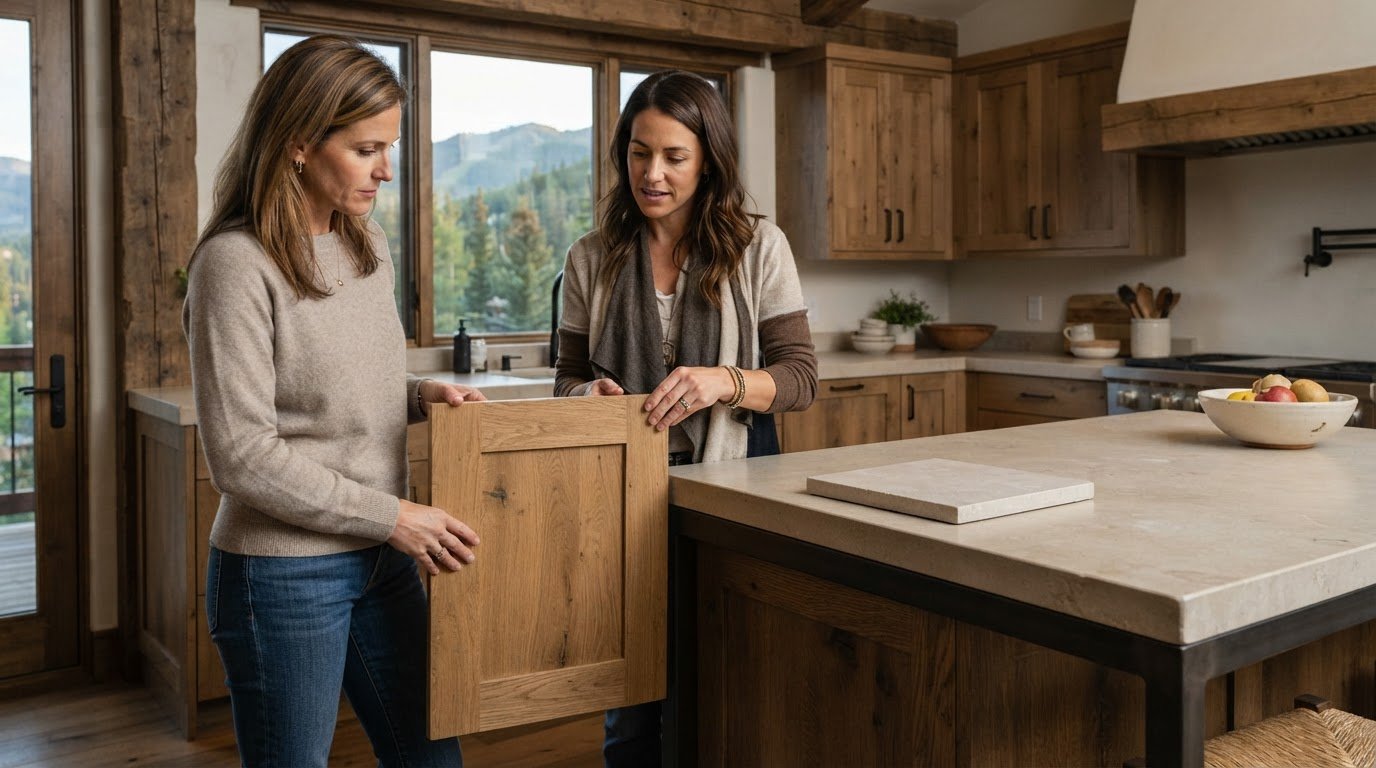
A successful design partnership depends not only on an inspired concept but also on the decisions that keep it coherent over time. Building a long-term relationship with a design firm starts with shared priorities, clear decision timelines, and an agreed process for resolving issues before they disrupt the work.
Thoughtful design and dependable communication go hand in hand, but a lasting relationship also needs practical agreements. Clarify who makes each decision, how quickly responses are expected, and what happens when a choice is delayed or priorities diverge.
This article explains how agency-client partnerships develop over time and offers examples of ways to keep them productive. You’ll learn how to set decision windows, define escalation paths, and create a working rhythm that supports both the creative vision and the everyday details of a project.
Key Takeaways
- Define who owns each design decision, how feedback is shared, and what happens when a choice is delayed.
- Set decision timeframes that reflect the importance of the choice, then agree on a clear escalation path for unresolved issues.
- Look for a design partner whose process, communication, and approach to your priorities can support an enduring working relationship.
- Use early conversations to clarify project goals, collaboration expectations, and how the design process will translate ideas into a cohesive interior.
Long-term agency-client relationship
A continuing partnership works best when each project builds on documented decisions rather than memory. Building a long-term relationship with a design firm means keeping the reasons behind those decisions visible. If a household’s priorities change after the initial concepts, record the new needs and adjust the design direction so future choices remain connected to the project’s goals.
Project-based work focuses on a defined scope and deliverables; an ongoing partnership can support evolving needs and build on what the team has learned about the home and its owners. Choose an approach that reflects whether your requirements are fixed or likely to change.
An ongoing retainer agreement can define recurring scope, communication cadence, responsibilities, revision handling, and how additional requests are approved. Put these terms in writing so both parties share the same expectations.
Define goals as practical project criteria, such as whether a plan supports circulation, intended uses, and agreed material choices. Review progress at planned milestones against those criteria, then document decisions and outstanding questions.
Make feedback actionable by consolidating comments, identifying the relevant drawing or material, and explaining the reason for each requested change. Record approved revisions before the next presentation.
Relying on one firm can narrow the perspectives involved and create challenges if staffing or project needs change. Keep project records organized and periodically assess whether the firm’s capacity and approach still suit your goals.
Protect intellectual property and file access by addressing ownership or usage rights, deliverable formats, and handover expectations in the agreement. Maintain an accessible archive of approved plans, specifications, and revision records.
Revisit the agreement when the scope, priorities, communication, or responsibilities change substantially. If concerns persist, document them, discuss a revised working plan, and follow the agreed exit and handover terms. Building a long-term relationship with a design firm also means recognizing when its structure needs to evolve.
A sustainable agency partnership should consider retirement planning, tax advice, and brand diversification. Keep those considerations within long-range discussions about how the partnership can continue to serve changing needs, rather than treating continuity as only a matter of project records and handover. Revisit them when assessing whether the agency relationship and its broader direction remain aligned. This offers a wider frame for considering sustainability alongside evolving work.
Setting decision-making timeframes and escalation paths
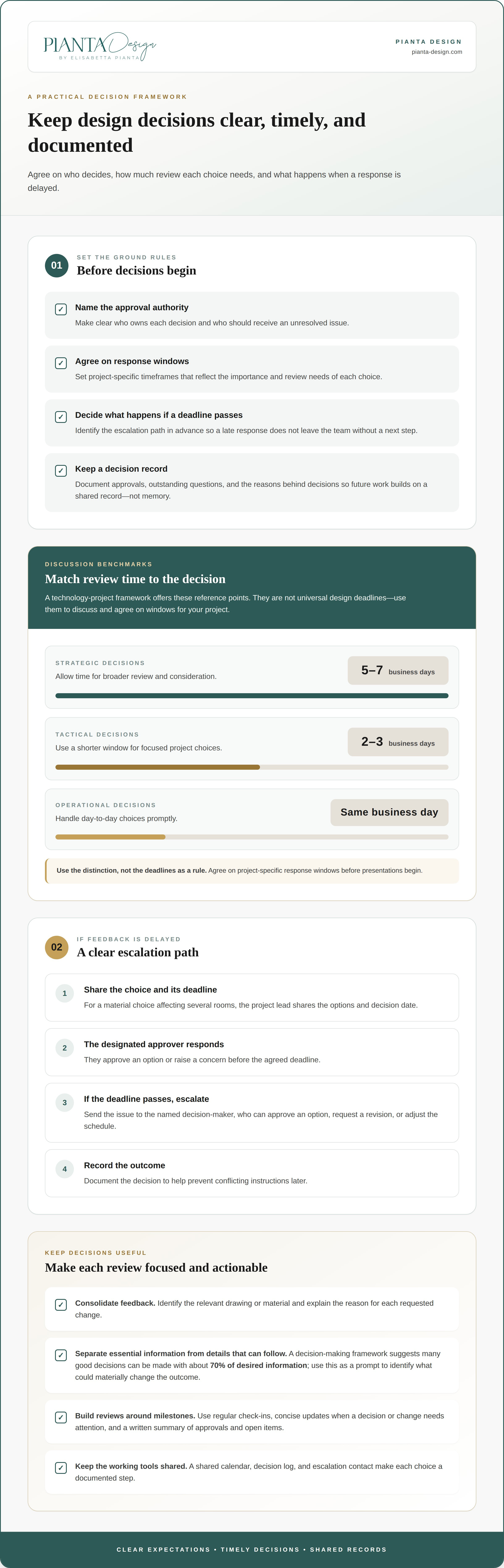
A design schedule depends on timely decisions, but some choices have greater consequences than others. Set response windows by decision type, identify who has approval authority, and agree on what happens if a deadline passes. This gives the team a clear path forward when priorities shift or feedback is delayed.
A framework for technology projects recommends 5-7 business days for strategic decisions, 2-3 business days for tactical decisions, and the same business day for operational decisions. These are technology-project benchmarks, not universal design deadlines. Use the distinction to discuss how much review each design choice needs, then agree on project-specific windows.
Imagine a material choice that affects several rooms. The project lead shares the options and decision date, and the designated approver responds or raises a concern. If the deadline passes, the issue goes to the named decision-maker, who can approve an option, request a revision, or adjust the schedule. Recording the outcome helps prevent conflicting instructions later.
How often should clients and design firms communicate? Set regular check-ins around project milestones, with concise updates between meetings when a decision or change needs attention. A concept presentation, for example, can be followed by a focused review and a written summary of approvals and open items.
What should a design services agreement include? Define the scope, deliverables, responsibilities, revision process, communication expectations, decision authority, and steps for handling changes or unresolved issues. Clear terms help distinguish a new request from an agreed deliverable.
Decision quality also depends on clarity, not endless information gathering. A framework advises that many good decisions can be made with about 70% of desired information. Treat that as a prompt to identify what is essential, what can follow, and which unresolved detail could materially change the outcome.
For a project involving carefully coordinated interior design decisions, agree on approval windows before presentations begin. A shared calendar, decision log, and escalation contact turn each choice into a documented step rather than a source of avoidable delay.
How do you choose a design firm for a long-term partnership?
Look beyond a polished portfolio. Assess how a firm listens, explains its process, and handles decisions. Ask how it translates your priorities into design criteria, then consider whether its response addresses your needs. A strong fit connects visual judgment with practical project goals instead of imposing a signature look regardless of context.
Review proposed terms before work begins. They should clarify scope, deliverables, responsibilities, revision handling, communication, and how changes are agreed. Ask how concepts move from initial discussion to presentation and approval. Mood boards, floor plans, or visualizations can help make design intent tangible, while clear review stages show how feedback informs the next phase.
In a home project, a firm’s understanding of how you want to live matters as much as the look of the space. Share your priorities and examples, then ask how they will inform decisions about materials, layout, and atmosphere. This gives you a shared basis for evaluating proposals as the design develops.
Look for transparent terms and a record of work that respects a client’s values while adapting to changing needs. Ask for relevant project examples and listen for specific explanations of challenges, decisions, and outcomes. Testimonials can offer useful context when they describe professionalism and communication, rather than relying on dramatic promises or claims of instant transformation.
Test the working relationship in conversation. Describe a design challenge, such as balancing a welcoming atmosphere with everyday function. Notice whether the firm asks focused questions, explains trade-offs, and responds to your priorities. These details can show whether collaboration will remain constructive as your needs evolve. Choose a partner whose process makes your goals visible in each design decision.
A professional agency partner should provide transparent terms, clear contracts, and a record of scaling brands without compromising the creator’s values. The same scrutiny applies to a long-term design relationship: ask how authority is shared and how decisions stay aligned with your priorities. Creators should be cautious of agencies that demand total control of their accounts or promise overnight fame without a clear strategy. When evaluating an agency, creators should look for testimonials that emphasize professionalism and safety rather than promises of quick wealth. These signals can help distinguish a durable partnership from a sales pitch.
What questions should you ask before hiring a design firm?
Use the first conversation to understand how the firm turns ideas into a defined process. Ask who will guide decisions, how the work will be presented, and how the team responds when priorities change. Specific answers make it easier to picture the collaboration, not just the finished room.
- How will you learn what matters to us? A useful answer explains how the firm gathers priorities, studies the space, and translates daily routines into design criteria.
- Who will lead the work and communicate with us? Clarify the main contact and how decisions or updates reach everyone involved.
- What will we review at each stage? Ask whether presentations include materials such as mood boards, floor plans, or visualizations, and when feedback is incorporated.
- How are revisions and new requests handled? Ask how the team records changes and distinguishes them from the agreed scope.
- How do you approach project challenges? Request an example showing the situation, the action taken, and the result.
Imagine a home project where the initial concept feels elegant but overlooks storage needs. Ask how the firm would respond. A considered process might revisit household routines, adjust the plan, and present a revised layout for review. The answer can show whether practical needs will inform the design without compromising its visual coherence.
Ask how project files, approvals, and final deliverables are organized. A written decision record, for example, helps distinguish an approved material from an option still under discussion. Clarify how you will receive relevant files and what happens if the project pauses or responsibilities change.
Listen for clear explanations of scope and decision-making, rather than promises of an overnight transformation. A firm should be able to describe its process plainly and connect recommendations to your goals. Those answers help you assess whether its approach can support a considered, lasting partnership.
Bring your project priorities into a focused first conversation. Discuss your design goals and the decisions that will shape the space.
Pianta Design
Pianta Design can help turn the principles of a lasting design partnership into a considered interior project. Its work spans residential, commercial, and yacht interiors, with custom furniture design for spaces that call for a tailored solution. Bring forward your priorities, the decisions that matter most, and the way you prefer to collaborate. These details give the design process a clear foundation while leaving room for thoughtful refinement as needs evolve.
For a home, workplace, or yacht, Pianta Design develops interiors around the relationship between function, atmosphere, and individual character. A continuing dialogue can help keep those qualities aligned as design choices take shape. Contact Pianta Design to discuss your project and the kind of working relationship you’re looking for.
Let the Partnership Evolve With Your Space
A design partnership can remain valuable as your needs and routines change. Treat the initial brief as a foundation, not a limit: keep your priorities visible, notice when the space no longer supports them, and bring those observations into future design conversations. Building a long-term relationship with a design firm is an ongoing process of refinement, grounded in how your home serves you.
Pianta Design works across residential and commercial interiors, with custom furniture design for projects that call for a more tailored expression. Whether you’re shaping a home, a workplace, or a future design direction, a clear conversation about your aims can help define a thoughtful starting point.
Contact Pianta Design to discuss your project and consider how its design can grow with your needs. A well-considered space can continue to feel personal, purposeful, and beautifully composed.
