
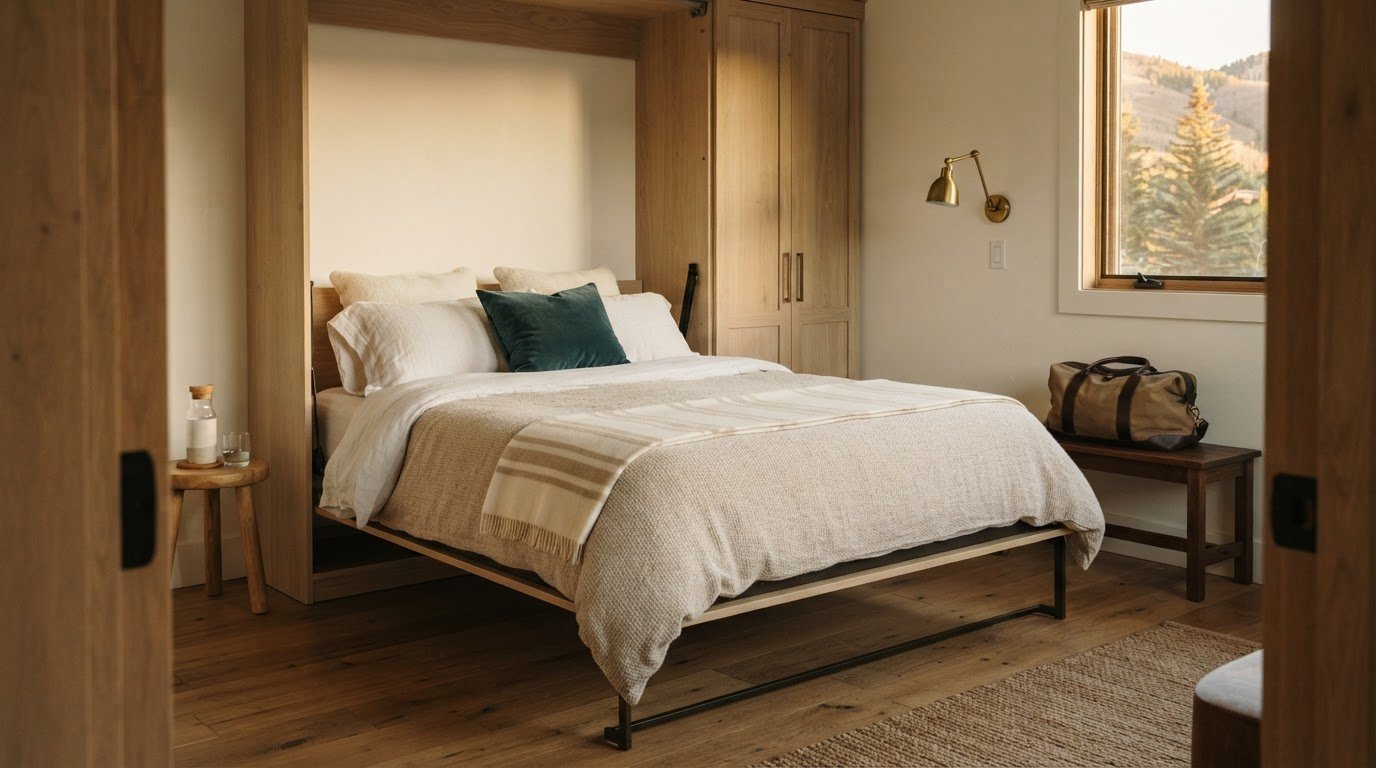
Soft, neutral tones are a versatile choice for a guest bedroom, creating a restful backdrop without imposing a strong personal style. In a smaller room, light shades such as white and beige, paired with soft wood, can make the space feel brighter and more open. A guest suite design for ultimate comfort balances this quiet palette with thoughtful lighting, useful storage, and a bed suited to the room.
Color sets the mood, but comfort comes from details guests can use easily: a supportive bed, a place for personal belongings, and lighting they can control from bed. The best choices also reflect how the room functions between visits, whether it is dedicated to guests or serves another purpose.
Here, you’ll find guidance on choosing a guest-bedroom color, prioritizing comfort, and adding welcoming touches without clutter. You’ll also explore flexible sleeping options, from daybeds to Murphy beds, that help a guest room work beautifully in everyday life.
Key Takeaways
- Make unpacking effortless by planning clear closet or drawer space and a practical spot for luggage.
- Choose bedding that can accommodate different sleep preferences, with extra pillows and blankets ready to use.
- Layer room lighting and window treatments so guests can read, relax, and manage morning light comfortably.
- Match a Murphy bed, daybed, or sleeper sofa to how the room needs to function between visits.
1. What's the best color for a guest bedroom?
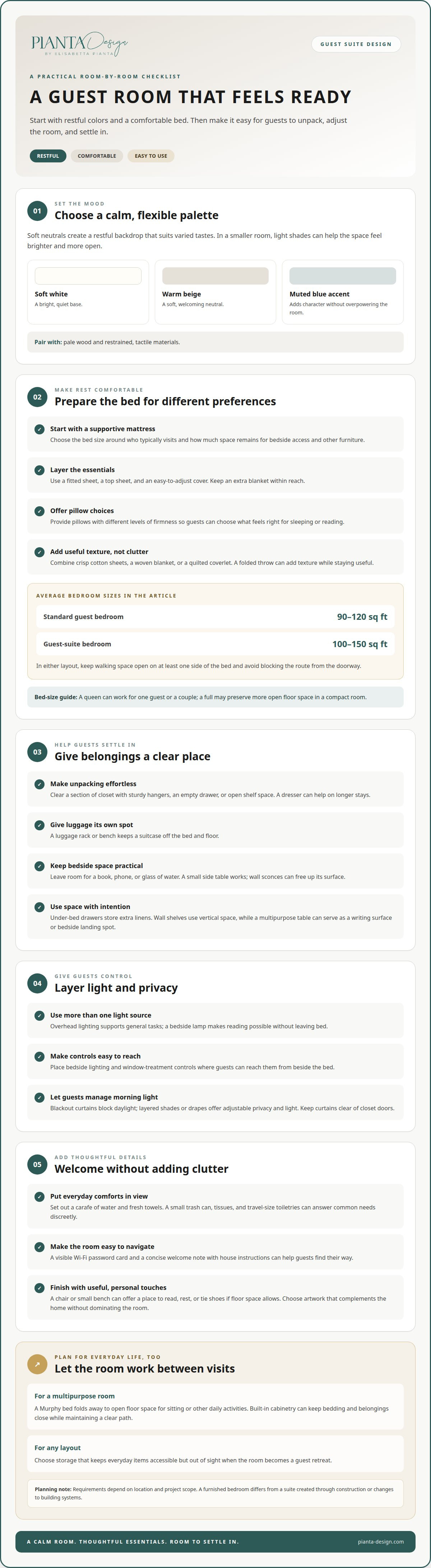
Soft white, warm beige, and pale wood create a calm atmosphere that suits varied tastes. In a small bedroom, these light tones can make the room feel brighter and more open. Pair them with a richer accent, such as a muted blue cushion, to add character without overwhelming the retreat.
In the United States, requirements depend on location and project scope. A furnished bedroom differs from a suite created through construction or changes to building systems, so design plans should account for applicable local requirements.
The cost to design or renovate a guest suite depends on the project scope, existing conditions, materials, and custom elements. Pricing for a specific project is provided after a quote request.
Plan storage around how guests arrive and settle in. A clear closet section with sturdy hangers, an empty drawer, or open shelf space gives visitors room to unpack. Add a luggage rack or bench so a suitcase has a defined place instead of taking over the bed or floor. For longer stays, a dresser can make the guest space more functional.
Then consider how the bedroom serves daily life between visits. A multipurpose table can work as a writing surface or bedside landing spot, while wall shelves use vertical space for books and personal objects. In a compact room, under-bed drawers hold extra linens without taking up floor area. Choose storage that keeps everyday items accessible but out of sight when the room becomes a guest retreat.
Built-in storage can create a seamless look, especially when cabinetry is planned around a concealed bed. A Murphy bed folds away to open floor space for sitting or other daily activities. In a narrow layout, integrated cabinets keep bedding and belongings close while preserving a clear path through the room.
Keep bedside essentials within reach. A nightstand or small side table gives guests a place for personal items, and a reading lamp makes lighting easy to control. Wall sconces can free the tabletop for a book, phone, or glass of water.
2. What are the most important guest room ideas to start with?
A comfortable guest suite starts with a supportive mattress and clean bedding prepared before visitors arrive. Add soft sheets, an extra blanket, and pillows with different levels of firmness so guests can adjust the bed to their preferences. These essentials make the room feel considered without relying on elaborate decor.
A guest-suite bedroom averages 100-150 sq ft, while a standard guest bedroom averages 90-120 sq ft. In either layout, leave open walking space on at least one side of the bed, and choose furniture that doesn’t obstruct the path from the doorway.
For many homeowners, a queen bed offers a practical balance for one guest or a couple. If the room is compact, a full bed may preserve more open floor space. Choose according to who typically visits and how much room remains for bedside access and other furniture.
Fresh bedding matters as much as the bed itself. Use a fitted sheet, a top sheet, and a cover guests can adjust easily; keep an additional blanket within reach for visitors who feel cool at night. A neatly folded throw at the foot of the bed adds texture while remaining useful.
Offer pillows in varied firmness rather than focusing on matching appearances. Two or more pillows give guests options for sleeping or reading, while a smaller accent pillow can add color and polish. Choose washable covers for decorative cushions to keep the arrangement practical between visits.
Layer tactile materials with restraint: crisp cotton sheets, a softly woven blanket, and a quilted coverlet create contrast without crowding the bed. For a tailored fit in an unusual layout, custom furniture design can coordinate a bed frame with the room’s proportions and storage needs. Keep the bedside surface clear enough for a book, phone, or glass of water.
3. How do I make a guest room feel welcoming?
A welcoming guest room feels calm and easy to understand from the moment visitors enter. Soft neutral colors such as warm white, beige, or pale gray create a restful atmosphere without competing with furnishings. In a guest bedroom with one small window, light tones can make the space feel brighter and more open. Thoughtful guest suite design for ultimate comfort also considers how color looks beside the floor, curtains, and bed at different times of day.
Give visitors control over privacy and morning light with considered window treatments. Blackout curtains help block daylight, while layered shades or drapes let guests adjust the room to their preference. Make the controls easy to reach from beside the bed. If the closet shares a wall with the window, keep curtains clear of its doors so guests can access hanging space comfortably.
Layer lighting for different moments instead of relying on a single overhead fixture. Overhead lighting serves general tasks, while a bedside lamp lets someone read without leaving bed. Wall sconces are another option when nightstand surfaces need to stay open for a book, phone, or glass of water. A guest suite design for ultimate comfort places each control where guests can find it easily after settling in.
Small, practical details make hosting feel thoughtful without filling the room with decoration. Keep the bedside table uncluttered, add a carafe of water, and leave fresh towels where guests can see them. A visible Wi-Fi password card, a small trash can, and a basket with tissues or travel-size toiletries answer common needs discreetly. Arrange pillows neatly, then add a plush throw or cozy rug for texture. A chair or small bench creates a useful place for reading, resting, or tying shoes, if floor space allows. Choose artwork that reflects the home’s style without dominating the guest room. A concise welcome note can share house instructions and local recommendations.
4. Murphy beds and sofa beds for multipurpose rooms
A multipurpose guest room can serve as an office, reading room, or sitting area between visits. A Murphy bed folds away to open floor space for a desk or comfortable chair. A sleeper sofa keeps seating available for daily use, then converts the room for overnight guests. For guest suite design for ultimate comfort, choose a sleeping option that works well in both modes.
Each option creates a different balance. A Murphy bed stores the sleeping surface out of sight, while a sofa bed makes the room feel like a lounge. A daybed with a pullout trundle combines daytime seating with extra sleeping space. In a narrow room, a fold-away desk can help preserve open floor area when the bed is in use.
For multigenerational visits, arrange furnishings for easy movement and access. Keep the route between the door, bed, and bathroom clear, and avoid placing a table where it narrows the path. A chair with arms can offer a supportive place to sit. Keep a lamp switch and an extra blanket within reach of the sleeping area.
Thoughtful room ideas also make transitions simple. A bench at the foot of the bed can hold a folded blanket, provide a seat for changing shoes, or serve as a temporary luggage surface. Position it so it won’t obstruct the route when someone opens a trundle or unfolds a sofa bed. A movable coffee table can be shifted aside to make room for sleeping.
Guest suite design for ultimate comfort considers how guests use the space when the bed is both stored and open. Keep bedding and reading materials in nearby storage, then test whether furniture can be moved without disrupting the room. For an unusual footprint, explore custom furniture design for a more considered, flexible layout.
Pianta Design
Pianta Design can bring color, comfort, and flexible use together in a considered guest-suite plan. Through Residential Interior Design, the team shapes the room around its proportions, intended use, and the atmosphere you want visitors to experience. When a standard bed or storage arrangement doesn’t suit the layout, Custom Furniture Design can create a tailored fit. Lighting and material choices support restful evenings and everyday use while keeping the room visually cohesive.
Turn to Pianta Design when planning a new guest room, refining an existing one, or balancing overnight comfort with another purpose. The team can translate your priorities into a unified design direction for the space. Contact Pianta Design to discuss your guest-suite plans.
Shape a Guest Suite Around the Life You Live
A guest suite design for ultimate comfort starts with a clear sense of how the room should feel when empty and when welcoming visitors. Consider which parts of your home deserve a more personal expression, what daily routines the room should support, and how its finishes can sit naturally within the wider interior. These priorities create a useful foundation for cohesive decisions rather than choices made one at a time.
Pianta Design brings together Residential Interior Design, Commercial Interior Design, and Custom Furniture Design to help shape distinctive spaces around their purpose and character. If you’re ready to explore the possibilities for your home or project, contact Pianta Design to begin a conversation. A thoughtful plan can turn your ideas into a guest suite that feels considered, comfortable, and distinctly your own.
Frequently Asked Questions
What's the best color for a guest bedroom?
Soft, light colors are a versatile starting point, especially when the room receives limited daylight. Consider how the wall color looks beside the floor, headboard, and curtains at different times of day. A muted accent on a cushion or artwork can add personality without making the whole room feel visually busy. In a brighter bedroom, deeper tones can bring intimacy and contrast.
How do I make a guest room feel welcoming?
Make the room easy to use without requiring guests to ask where things belong. Leave a clear surface for a phone or book, place house instructions somewhere visible, and keep personal items out of the closet or dresser space intended for visitors. A small note about the home’s routines can help guests settle in comfortably, particularly when they arrive while you’re away.
What are the most important guest room ideas to start with?
Start by deciding who the room needs to accommodate and how it functions between visits. That choice guides the bed arrangement, floor space, and storage. Then consider practical access: guests benefit from a reachable outlet or charging point, a surface for personal belongings, and a clear route through the room. These early decisions make later decorating choices more purposeful.
How do you make a guest room look like a hotel?
Create a composed, uncluttered setting rather than filling the room with decorative objects. Coordinate the bedding, window treatments, and artwork through a restrained palette, then provide a distinct place to sit if space allows. A neatly arranged bedside surface and a visible welcome card with Wi-Fi details add a sense of readiness. Keep the overall look consistent with the rest of the home.
How to decorate a spare guest room?
Give the spare room a useful everyday role, such as a reading nook, hobby space, or quiet place to work. Choose movable pieces that can be shifted for overnight stays, and use closed storage to tuck away supplies when visitors arrive. A cohesive color palette and a few personal touches, such as framed artwork or a textured throw, keep the room considered without making it feel overly formal.
What bed size works best in a guest room?
A queen bed can suit a guest room that regularly welcomes couples or needs flexibility for one visitor. A full bed may be a better fit when the room is compact and preserving walking space matters. Twin beds can work when the room primarily hosts one person at a time. Let the likely sleeping arrangement and remaining floor space guide your choice.
