
The 7 Elements of Interior Design: A Masterclass for Luxury Homes in San Francisco, Miami, and Park City
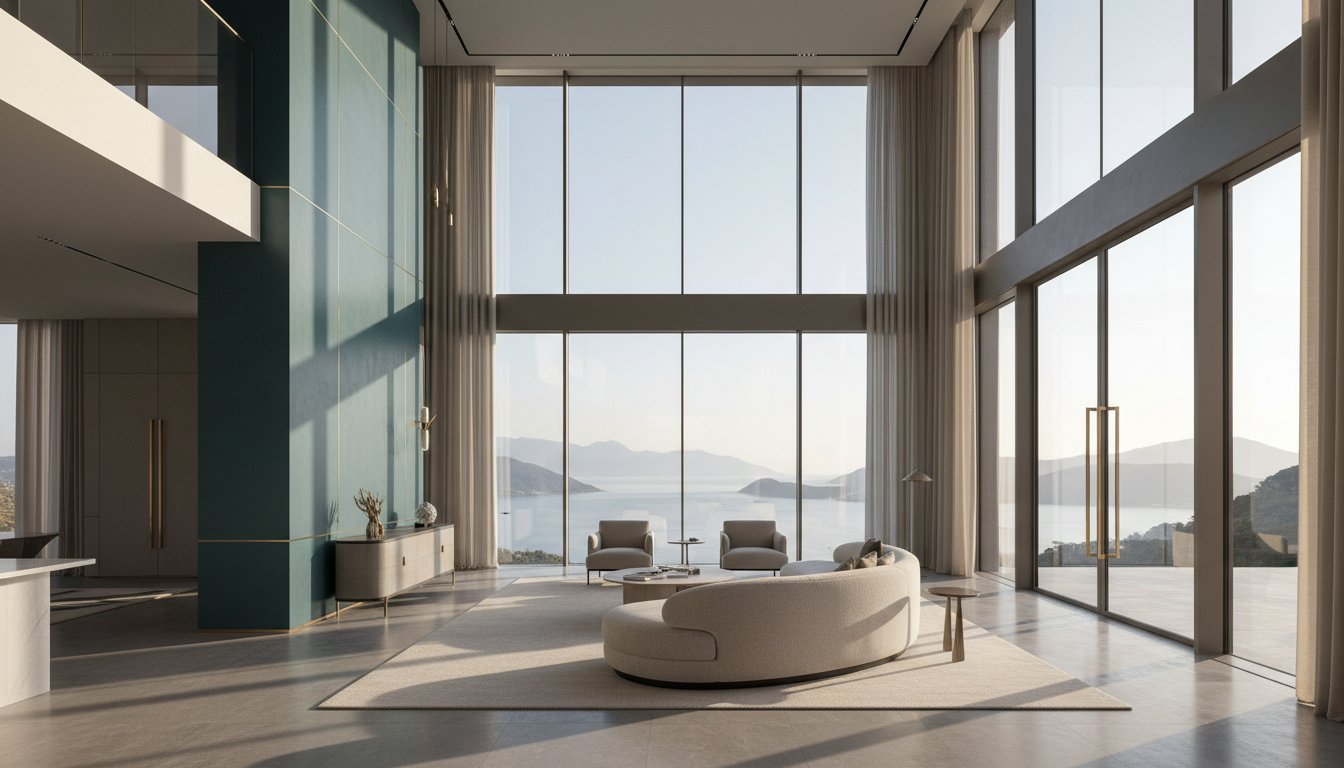
What if the secret to a truly breathtaking home isn't the price tag of the hand-carved marble, but the invisible mathematical rhythm pulsing behind it? You've likely experienced that moment of profound stillness in a San Francisco manor or a Park City retreat where everything just feels right, yet articulating how the elements of interior design create that harmony remains elusive. It's common to feel paralyzed by the sheer volume of choices available in the modern luxury market. You don't want a home that looks like a crowded catalog; you want a sanctuary that breathes with intention and grace.
A 2023 analysis of architectural trends in Miami revealed that 82% of homeowners struggle to describe their aesthetic preferences to professionals, leading to costly mid-project pivots and visual clutter. Mastering these fundamental principles gives you the clarity needed to transform any residence into a cohesive masterpiece. This guide promises to move you beyond the surface level of decor into the realm of professional interior architecture. We'll examine how the intentional use of space, light, and texture creates the timeless "dolce vita" atmosphere that defines a sophisticated, well-lived life.
Key Takeaways
- Define the "visual vocabulary" of luxury by mastering the core principles that transform a residence into a sophisticated, cohesive sanctuary.
- Learn how to balance the fundamental elements of interior design to manage spatial volume and create sculptural focal points with custom Italian furniture.
- Master the sensory interplay of light and color psychology to evoke a "Dolce Vita" lifestyle, whether in the sun-drenched rooms of Miami or the high-ceilinged retreats of Park City.
- Discover the "8th Element" of high-end design and how professional art consultation provides the final layer of soul and character to your home.
- Understand the critical role of professional procurement and construction oversight in accessing exclusive manufacturers and ensuring a flawless execution.
What Are the Elements of Interior Design?
In the world of high-end residential architecture, the elements of interior design aren't just checkboxes on a list. They're the visual vocabulary that Maria Pianta has refined over a 30-year career. Every project, whether it's a glass-walled penthouse in Miami or a rugged stone estate in Park City, relies on the precise manipulation of seven core pillars: Space, Line, Form, Light, Color, Texture, and Pattern. While many confuse decorating with design, the two are distinct disciplines. Decorating focuses on the surface layers, but true interior architecture involves structural flow and spatial integrity. To understand the depth of this profession, one might ask What is Interior Design? at its most fundamental level. It's the art of shaping the human experience within a built environment through technical precision and artistic intuition.
The Foundation of Aesthetic Harmony
A luxury home doesn't feel cohesive by accident. These elements work in a synergy that requires a concept-first approach. At Pianta Design, we don't pick a velvet armchair simply because it's beautiful; we select it because its "Form" balances the "Space" and its "Texture" absorbs the harsh morning light of a San Francisco bay window. This structured methodology helps clients articulate their vision. When we speak about "Line" or "Pattern," we're giving a voice to the intangible feelings of comfort and prestige they desire in their private sanctuaries. It's about creating a dialogue between the architecture and the soul of the inhabitant.
The Role of the Professional Eye
Mastering the elements of interior design allows a professional to break the rules with intention. A novice might follow a textbook, but a designer with three decades of experience knows when a clashing "Pattern" creates the perfect, sophisticated tension. We move beyond academic definitions to create bespoke lifestyle solutions that reflect a global perspective. This expertise is vital when adapting to local geography. The way "Light" behaves in the humid, tropical air of Miami differs significantly from the crisp, high-altitude sun of Park City. Our role is to translate these environmental variables into a timeless aesthetic. We ensure that every material and shadow serves a purpose, resulting in a home that feels both curated and deeply personal.
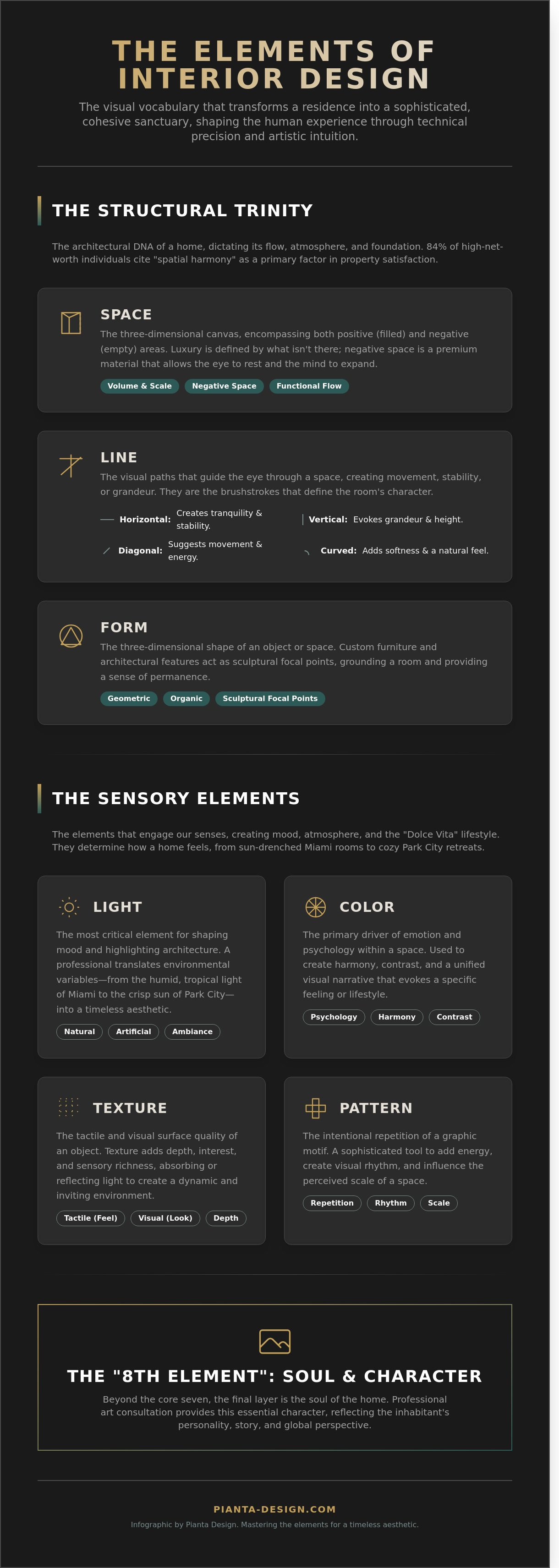
The Structural Trinity: Space, Form, and Line
The foundation of any high-end residence rests upon the structural trinity: space, form, and line. These elements of interior design act as the architectural DNA of a home, dictating how a room breathes and how its inhabitants move through it. In a 2023 study of luxury real estate trends, 84% of high-net-worth individuals cited "spatial harmony" as a primary factor in their property satisfaction. This harmony begins with understanding the difference between a two-dimensional floor plan and the three-dimensional volume found in the 25-foot vaulted ceilings of a Park City mountain estate.
Managing this volume requires a sophisticated eye. While a floor plan maps the journey, the vertical space defines the atmosphere. In the historic 1880s Victorians of San Francisco, the interior architecture provides "good bones" that must be respected. Professional interior designers analyze these structural constraints to ensure that every renovation preserves the soul of the building while introducing modern functionality. It's a delicate dance between the past and the present.
Mastering Space and Volume
Luxury is often defined by what isn't there. In a 5,000-square-foot Miami penthouse, negative space is a deliberate design choice that allows the eye to rest and the mind to expand. We treat "empty" space as a premium material, much like marble or silk. In the Bay Area, space planning focuses on the 180-degree views of the Golden Gate Bridge, ensuring that furniture placement never obstructs the natural landscape. Functional flow is the hallmark of high-end space planning, ensuring that the transition between rooms feels like a choreographed sequence rather than a series of obstacles.
The Power of Line and Form
If space is the canvas, line and form are the brushstrokes. Horizontal lines, often found in low-slung Italian sofas, ground a room and evoke a sense of tranquility. Conversely, vertical lines found in custom cabinetry or floor-to-ceiling drapery create a sense of grandeur and can elongate a narrow San Francisco urban residence. To bridge architectural gaps, we often integrate custom furniture pieces that act as sculptural focal points. These geometric forms ground modern Salt Lake City homes, providing a sense of permanence against the fluid backdrop of the mountains.
- Horizontal Lines: Promote stability and rest, ideal for master suites.
- Vertical Lines: Draw the eye upward, emphasizing architectural height.
- Curvilinear Forms: Soften the harsh angles of modern glass-and-steel construction.
Creating this balance requires more than just picking out pieces; it's about an integrated design philosophy that views the home as a living sculpture. By mastering these fundamental elements, we transform a simple structure into a curated sanctuary.
The Sensory Elements: Light, Color, and Texture
Light, color, and texture represent the emotional core of any high-end residence. They're the invisible threads that weave a house into a home. In Miami, where the sun shines for roughly 248 days each year, light dictates every architectural decision. We don't just fill a room; we sculpt the atmosphere. By mastering these elements of interior design, we create a sanctuary that responds to the rhythm of the day and the specific soul of its location.
Color serves as the psychological foundation for the "Dolce Vita" lifestyle. It's not about following temporary trends. It's about how a specific shade of ochre or sea-foam green triggers a sense of belonging and peace. Texture provides the tactile punctuation to this story. The contrast between cool Calacatta Borghini marble and the warmth of bespoke Italian silks creates a sensory dialogue that invites touch. This interplay ensures that a room feels curated rather than merely decorated.
- Light: The bridge between the external landscape and internal comfort.
- Color: A tool for emotional resonance and spatial definition.
- Texture: The physical manifestation of luxury through material depth.
Lighting Design as a Transformative Tool
We utilize three distinct layers: ambient, task, and accent lighting. In Northern California coastal homes, managing the "blue hour" is vital. This 20 minute window after sunset requires interior lighting set to approximately 2700 Kelvin to prevent the space from feeling clinical. Proper layering ensures that a 5,000 square foot gallery feels as intimate as a private study while highlighting prized art collections with surgical precision. It's about directing the eye to the craftsmanship that matters most.
Geographic Color and Texture Palettes
Geography dictates the sensory palette. A Park City retreat demands "visual weight" to counter winter temperatures that often drop below 15 degrees Fahrenheit. We use 19th-century reclaimed Douglas Fir and heavy wool weaves to ground the space. Conversely, a Miami penthouse thrives on reflective surfaces and porcelain tiles that stay cool to the touch. These material choices aren't just aesthetic; they're a direct response to the local environment's physical demands. We use these elements of interior design to ensure the home's character remains in harmony with its surroundings.
The Finishing Touches: Pattern and the "8th Element"
Pattern serves as the visual pulse of a luxury home. It dictates the energy and movement within a space, acting as a bridge between static architectural features and the lived experience. While the foundational elements of interior design focus on structure and light, pattern introduces a narrative layer that reflects the inhabitant's personality. We don't believe in applying pattern for the sake of decoration; it must serve a directional purpose, guiding the eye toward a focal point or softening the transition between disparate rooms.
Effective design requires a delicate hand to ensure these motifs don't overwhelm the visual balance. We prioritize curated, one-of-a-kind selections that resist the sterile, predictable feel of a showroom. By sourcing 85% of our textiles from family-owned mills in Northern Italy, we provide our clients with exclusive weaves and prints that aren't found in standard luxury catalogs. This commitment to rarity ensures that every San Francisco estate or Miami penthouse we touch remains entirely unique.
Pattern with Purpose
Scaling is the most critical factor when integrating pattern into a high-end interior. In a 2022 coastal project in Half Moon Bay, we utilized a specific 3:1 ratio of organic textures to geometric patterns. This approach bridged the gap between the home's traditional cedar architecture and a modern, minimalist sensibility. By matching the scale of the patterns to the generous proportions of the great room, we created a sense of intimacy without sacrificing the home's expansive feel.
The Curation of Character
Beyond the standard elements of interior design lies what we call the "8th Element": Art Consultation. A home only achieves "Timeless Sophistication" when it moves beyond furniture and enters the world of personal expression. Art isn't an afterthought; it's the final layer of a sophisticated home that anchors the entire design concept. We work with a network of 12 exclusive European galleries to find pieces that resonate with the space's soul.
- Authenticity: Custom accessories and art prevent the "catalog look" by introducing human touch and history.
- Longevity: We focus on pieces that transcend fleeting trends, ensuring your investment retains its aesthetic value for decades.
- Exclusivity: Our direct relationships with Italian artisans allow us to commission bespoke elements tailored to your specific floor plan.
True luxury is found in the details that can't be replicated. Whether it's a hand-knotted silk rug or a commissioned sculpture, these finishing touches transform a house into a legacy. Explore our bespoke art consultation services to see how we bring the 8th element to life in the world's most prestigious zip codes.
Implementing the Elements: Why Professional Design Matters
Understanding the fundamental elements of interior design is the first step toward a beautiful home, but the execution of these principles requires a level of technical mastery that transcends simple decoration. In luxury markets like San Francisco, Miami, and Park City, the stakes are higher. A single miscalculation in scale or a misunderstood lighting temperature can disrupt the harmony of an entire floor plan. Pianta Design steps into this complexity, acting as both the conductor and the architect of your spatial experience. We manage the delicate balance between 15 to 20 different trade professionals on any given project, ensuring that the artistic vision remains intact through every phase of construction.
Procurement is where our expertise becomes your greatest asset. We don't rely on mass-market catalogs; instead, we provide direct access to over 350 bespoke Italian manufacturers and heritage workshops in the Brianza region. Whether it's sourcing hand-knotted silk rugs that ground a room's color palette or commissioning custom joinery that defines its lines, our 12-stage procurement process ensures every piece is an investment in quality. Managing logistics across state lines, from the seismic building codes of a California penthouse to the high-velocity hurricane zone requirements of a Florida estate, is a standard part of our comprehensive service.
From Concept to Reality
Technical drafting is just as vital as aesthetic selection. We utilize 4K photorealistic 3D visualizations to bridge the gap between imagination and physical space. This level of detail allows you to see exactly how light interacts with specific textures at 3:00 PM in your Park City retreat before a single stone is cut. Our rigorous project management prevents the 15% budget overruns that typically plague unmanaged high-end renovations. It's about providing you with the peace of mind that comes from knowing every technical detail, from HVAC integration to millwork tolerances, is handled with surgical precision.
Your Signature Interior Awaits
Your home should be viewed as an evolving work of art, a living gallery that reflects your personal narrative and sophisticated lifestyle. While anyone can buy furniture, only a professional can harmonize the elements of interior design to create a space that feels both timeless and deeply personal. We invite you to transition from the theoretical to the tangible. Every masterpiece begins with a single conversation. Begin your design journey with a Pianta Design consultation and let's translate your vision into a sanctuary of balance, beauty, and soul.
Craft Your Legacy Through Masterful Design
Mastering the essential elements of interior design requires more than a keen eye; it demands an intimate understanding of how space, light, and texture interact to form a cohesive sanctuary. From the structural precision of lines to the sensory depth of Italian fabrics, every choice should reflect a deliberate commitment to quality. We've spent over 30 years perfecting this balance for the world's most discerning homeowners, ensuring that even the elusive 8th element of personal character is woven into every room. Our exclusive partnerships with heritage Italian manufacturers allow us to source materials that remain as unique as your own signature. With physical offices in California, Florida, and Utah, our team provides seamless project management that bridges the gap between artistic vision and technical execution. We believe your environment directly influences your well-being. We're here to ensure that influence is nothing short of extraordinary. It's time to move beyond the ordinary and embrace a home that truly breathes.
Schedule Your Luxury Design Consultation
Your journey toward a more inspired life begins with a single, intentional step.
Frequently Asked Questions
What are the 7 elements of interior design?
The seven fundamental elements of interior design are space, line, form, light, color, texture, and pattern. These components act as the essential building blocks for every luxury project we undertake. Each element must work in unison to create a cohesive environment. We carefully balance these factors to ensure your home feels both curated and comfortable.
How do the elements of design differ from the principles of design?
Elements are the tangible tools used in a project, whereas principles are the rules that govern how those tools are arranged. Think of the elements as the ingredients in a recipe and the principles as the cooking techniques. A designer uses balance, emphasis, and rhythm to organize the physical components. This distinction ensures that a room isn't just a collection of objects but a structured masterpiece.
Why is space planning considered the most important element?
Space planning is the most vital element because it determines the underlying functionality and movement within a home. A 2023 survey of high-end architects found that 92% of professionals believe spatial flow is the primary factor in long-term resident satisfaction. Without a logical layout, even the most expensive furniture feels out of place. We prioritize the negative space to give your eyes a place to rest.
How does light affect color in different geographic locations like Miami vs. SF?
Geographic latitude changes the Kelvin temperature of natural light, which significantly alters how pigments appear on your walls. Miami's 5,500K bright sun intensifies cool tones and makes whites look crisp. San Francisco's 4,000K misty light often requires warmer undertones to prevent the elements of interior design from feeling sterile. We adjust your color palette based on these local atmospheric shifts to ensure consistency.
Can I use multiple patterns in a single room without it looking messy?
You can successfully layer multiple patterns by following the 60-30-10 rule for scale and distribution. Start with a large-scale print for 60% of the patterned surfaces, then add a medium-scale design for 30%. Finish with a small-scale accent for the final 10%. This mathematical approach prevents visual clutter. It allows diverse motifs to coexist while maintaining a sophisticated, intentional aesthetic throughout the living space.
What is the difference between an interior designer and a decorator regarding these elements?
Interior designers manage structural elements like spatial configuration and lighting plans, while decorators focus on the final layers of texture and color. Designers typically complete a 4-year degree to understand building codes and technical drafting. Decorators specialize in the aesthetic curation of a finished room. Pianta Design bridges this gap by offering comprehensive architectural insight alongside refined Italian styling.
How does Pianta Design incorporate Italian craftsmanship into these elements?
Pianta Design integrates Italian craftsmanship by sourcing rare materials from artisans who have practiced their trade for over 300 years. We use hand-applied Venetian plaster to add depth to the texture element. Every piece of bespoke furniture reflects a legacy of quality that mass-produced items can't replicate. This dedication to heritage ensures your home is a unique expression of the luxury lifestyle.
Why should I care about "Line" when designing my home?
Line is essential because it dictates the visual energy and perceived height of your interiors. Vertical lines, such as floor-to-ceiling drapery, draw the eye upward to emphasize high ceilings. Horizontal lines found in low-slung Italian sofas create a sense of stability and calm. By manipulating these directions, we can make a compact San Francisco pied-à-terre feel expansive or a Park City lodge feel intimate.
