
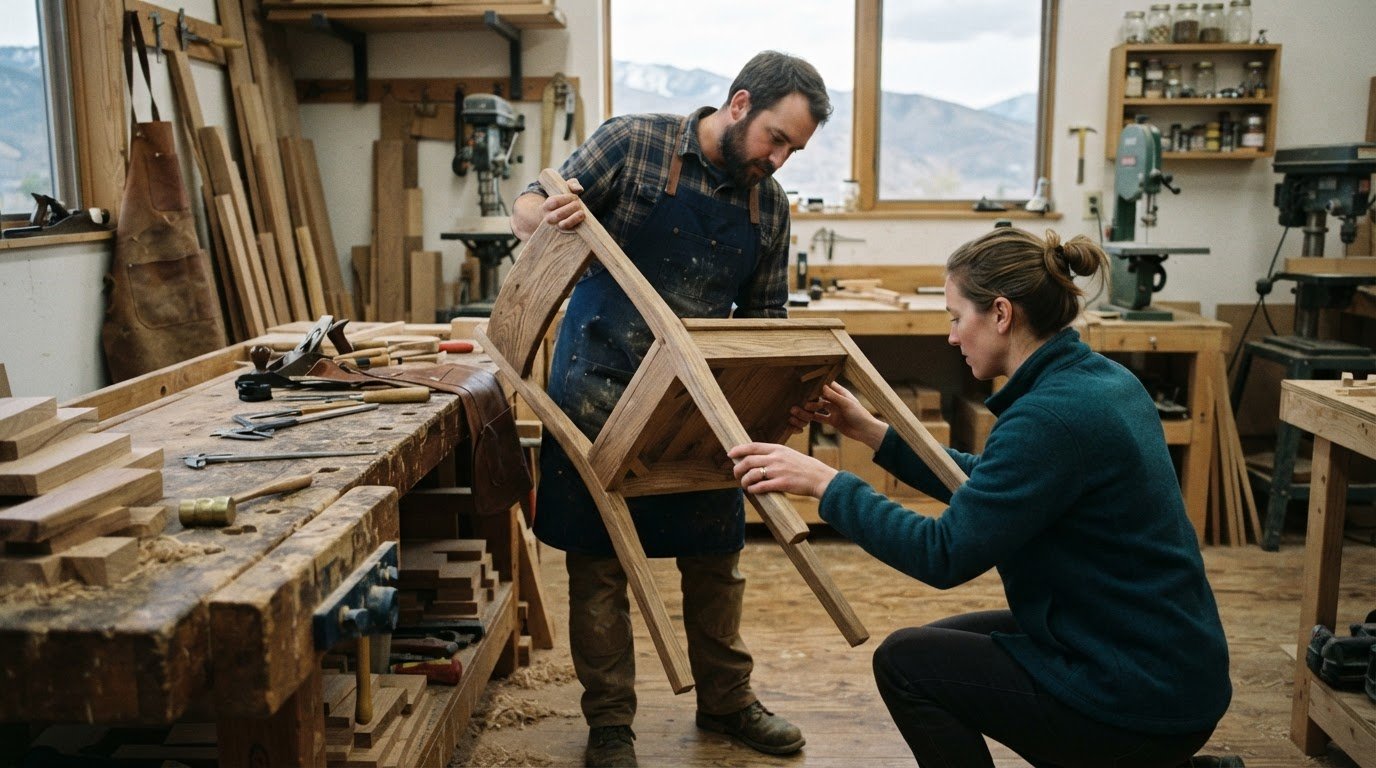
Yes, you can commission an artisan to create a custom piece. Working with artisans for custom pieces begins with a clear brief, not a perfect technical drawing. Describe the piece’s purpose, the dimensions and setting it needs to suit, your preferred materials and finishes, and any images that capture the mood. The artisan can then clarify design details with you before work begins.
A thoughtful commission is a collaboration: you bring the purpose and point of view, while the maker brings material knowledge and craft judgment. To feel confident about the result, discuss how the finished piece should look, how it will be used, and the care involved in making it.
This guide explains how to assess an artisan’s portfolio and process, prepare a useful project inquiry, and evaluate material quality and ethical production. You’ll also find practical prompts for discussing dimensions, construction, finishes, and the choices that shape a piece from first concept to final detail.
Key Takeaways
- Assess an artisan through the quality and consistency of their finished work, the techniques they use, and how they handle materials during production.
- Make your initial inquiry more productive by clearly describing the piece’s purpose, desired look, and essential requirements.
- Evaluate materials by considering how their properties, finish, and sourcing align with the piece’s intended use and your values.
- Share dimensions, space constraints, preferred materials, finishes, and construction priorities to help shape a custom piece that feels considered and functional.
Artisan vetting and craftsmanship
Start with the portfolio, looking beyond a striking hero image. Compare several finished pieces for consistent proportions, clean joins, even surfaces, and details suited to their use. For a custom chair, inspect the legs, seat edges, and finish; for a ceramic vessel, look closely at its rim and glaze. These details tell you more about execution than a single styled photograph.
In the United States, a specific educational credential is typically not required to work as a craft artist. Education can help develop artistic skills and build a body of work, while many makers learn through practice, hands-on instruction, courses, or working alongside an experienced artisan. Assess demonstrated skill and relevant experience rather than treating a degree as a universal measure of craft.
- Portfolio: Compare related examples to see how the maker handles form, finish, and practical details across different pieces.
- Sketches, templates, or models: The U.S. Bureau of Labor Statistics describes these as tools artists use to guide their work. A sketch clarifies appearance, while a model can communicate shape and proportion.
- Process photographs: Images of work in progress can show construction stages and finishing choices that final photographs conceal.
- Material samples: Reviewing a wood, glaze, or textile sample helps make color, texture, and finish more tangible before design decisions are settled.
Ask how the artisan checks the piece as it develops. Experienced makers inspect work during production and may adjust their approach when a material behaves unexpectedly. In woodworking, for example, the grain can influence how a component is cut or finished. Responding thoughtfully to the material is part of craftsmanship.
Finally, distinguish one-of-a-kind commissions from repeated workshop designs. Both can involve skilled judgment, especially at important production stages. Look for evidence of careful finishing: wood may be smoothed and polished, while ceramics may be glazed or given another suitable treatment. Match the maker’s demonstrated methods to the material, function, and level of detail your piece requires.
Contacting artisans about custom projects
Working with artisans for custom pieces can start with a concise email describing the object, its purpose, preferred materials, and intended setting. Attach reference images or an annotated sketch, then ask whether the artisan has relevant experience and what information they need next. The National Center for O*NET Development notes that craft artists consult with customers to assess needs and get feedback.
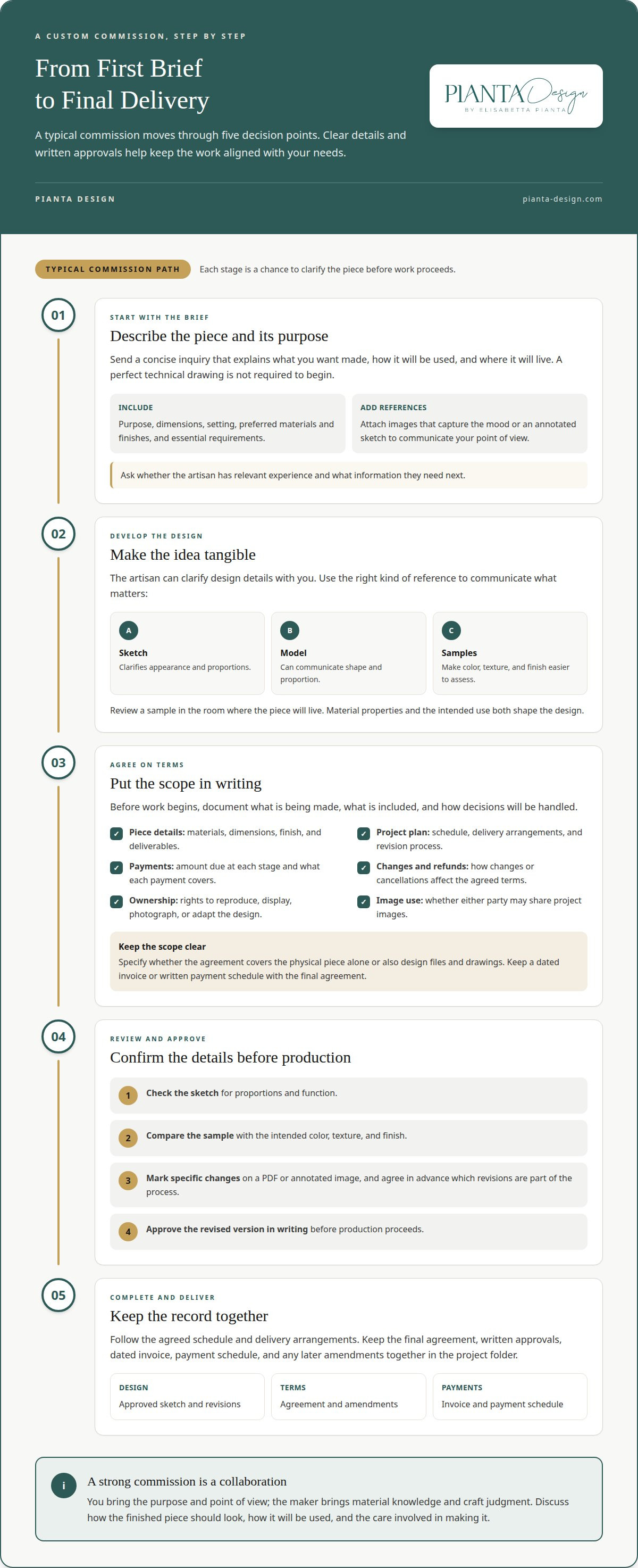
A commission typically moves through several stages: discuss the brief, develop a design, agree on terms, approve the work, and arrange completion and delivery. Treat each stage as a decision point. Keep dimensions, material choices, finish preferences, and agreed changes in a shared document, and use email to preserve a written record of approvals.
To clarify ownership rights and future use, state in writing who may reproduce, display, photograph, or adapt the design, and whether either party may share project images. Specify whether the agreement covers the physical piece alone or also design files and drawings. A practical approach to working with artisans for custom pieces defines permitted uses before work begins.
Deposits, payment milestones, and refunds depend on the agreed commission terms. Before paying, record the amount due at each stage, what each payment covers, and how cancellations or changes affect refunds. A dated invoice or written payment schedule makes the expectations clear.
A written agreement should identify the piece, materials, dimensions, finish, deliverables, schedule, payment plan, revision process, and delivery arrangements. Include how changes are approved and how ownership and image use are handled. Keep the final version and any later amendments together in the project folder.
Review a sketch for proportions and function, then compare a sample with the intended color, texture, and finish. Use a PDF with comments or an annotated image to mark specific changes, and approve the revised version in writing before production proceeds. Agree in advance on which revisions are part of the process.
To find artisans in the United States, explore local craft markets, maker fairs, galleries, and arts organizations, then note makers whose work suits your project. A spreadsheet can track names, specialties, locations, and follow-up dates. For a furniture commission shaped by a room’s layout, custom furniture design can connect the piece with the wider interior.
Material quality and ethical production
Choose materials for both appearance and intended use. Clay, glass, textiles, wood, and metal each respond differently to handling, wear, moisture, and finishing. For a dining table, grain and surface treatment shape its character; for a woven wall hanging, fiber texture and weave affect the visual result. A material sample helps you assess color and texture in the room where the piece will live.
Consider ethical production through specific, explainable choices rather than broad labels. Ask where materials come from, whether reclaimed or recycled content is used, and how the maker reduces offcuts or excess material. A clear account of sourcing and production gives you concrete details to evaluate. Since practices can differ by material, discuss wood, metal, glass, and textiles separately.
- Loupe: Examine wood grain, textile fibers, glaze, or metal finishing for visible inconsistencies and surface defects.
- Caliper: Compare material thickness at different points, such as the edge of a wood panel or a metal component.
- Moisture meter: Assess moisture in timber, which can help inform decisions about its suitability for a furniture project.
- Swatch card: View fabric, finish, or color samples beside nearby surfaces and under the room’s lighting.
Construction and finish influence how a material performs over time. Look for clean joins in woodwork, even glass edges, secure textile seams, and a consistent protective finish where one is intended. Natural materials vary: individual boards have different grain patterns, so finished wooden pieces will not be identical. Discuss acceptable variation before approving the design.
For a considered material and finish selection, connect each choice to the piece’s function, setting, and maintenance needs. A soft textile may suit an accent cushion but not every high-use surface. Ask the artisan to explain the trade-offs between appearance, durability, sourcing, and care. Record the selected material and finish in the project agreement so the approved sample and finished piece meet the same expectations.
What information should I provide when commissioning a custom piece?
Start with the piece’s purpose and the people who will use it. A reading chair, for example, needs to support a different posture than a dining chair. Describe daily routines, preferred comfort, and functional requirements. This context helps the maker develop proportions and construction for real use, not appearance alone.
Share the intended location and usable dimensions. Measure the room, doorway, and access route, then note nearby furniture and circulation space. A tape measure captures dimensions; a floor plan shows how the piece relates to its surroundings. Include the units and identify fixed constraints, such as a narrow alcove or low ceiling.
For furniture, describe the desired shape, wood type or other material, finish, and construction priorities. Say whether you prefer visible grain, a smooth surface, or a particular level of visual contrast. Separate essential requirements from preferences. A specific footprint, for instance, may be essential, while a rounded edge can remain open to design interpretation.
- Room photographs: Show existing colors, finishes, light, and neighboring furnishings.
- Annotated sketch: Mark approximate proportions, feature placement, and details that matter.
- Reference board: Collect images that communicate mood, silhouette, and finish without assuming every image should be copied.
- Measurement sheet: Record dimensions, access limits, and the piece’s intended position.
Custom woodworkers may discuss proportions, dimensions, wood types, finishes, and construction methods during design development. Explain which qualities matter most, then weigh the maker’s recommendations against your practical needs. A clear brief also supports useful sketches and models, making it easier to review the design before production.
Gather these details into one project brief, with images clearly labeled and measurements easy to locate. For a furniture concept that must respond to a room’s layout and daily use, develop your custom furniture design with considered attention to proportion, material, and function.
Pianta Design: Custom Furniture Design
Pianta Design brings custom furniture design into the wider context of a home, commercial space, or yacht interior. This approach is useful when a piece needs to respond to a room’s proportions, practical use, and overall design direction, rather than stand alone as an isolated object.
The process can connect furniture concepts with material and finish choices, space planning, and interior architecture. Mood boards, floor plans, and 3D visualizations help you review how a proposed piece relates to the surrounding space before decisions are finalized. For a residential, commercial, or yacht project, this joined-up perspective can help align function and visual character.
If you’re planning custom furniture, contact Pianta Design to discuss your space and ideas.
Bring your custom piece into focus
Begin with a clear design direction: decide how the piece should support daily life and what role it should play in its setting. A well-defined purpose guides every later choice, from scale to visual presence.
Working with artisans for custom pieces becomes more considered when the object is planned as part of a larger interior, rather than treated as an isolated detail. Pianta Design’s Custom Furniture Design can be considered alongside Residential Interior Design or Commercial Interior Design, depending on the space and its needs.
Share the room, the intended use, and the atmosphere you hope to create. Contact Pianta Design about your project to begin a conversation about a custom furniture piece and the setting around it. A thoughtful first step can bring the idea into clearer view.
Frequently Asked Questions
Can I request a custom-made item from an artisan?
Yes, you can commission artisans to make custom pieces across many craft disciplines. Your request might be a handwoven textile sized for a particular wall or a ceramic vessel with a chosen shape. Describe the purpose and desired character first; the maker can then discuss how the idea translates into materials, technique, and a finished object.
How do you ensure the quality of the handmade products?
Assess quality against criteria agreed for the specific piece, rather than expecting handmade work to look mechanically identical. For a wooden cabinet, check that doors align and drawers move smoothly; for a textile, consider the consistency of the weave and the finish at its edges. Before completion, compare the finished work with the approved design and note any agreed natural variation.
How do I find and vet artisans for custom work?
Seek referrals from people whose commissioned pieces you admire, then look for examples that match your intended material and function. Ask the maker to explain how a comparable project developed, including decisions that changed during production. A focused conversation can show whether they understand your priorities and communicate clearly. For furniture, discuss how the piece will fit its room and daily use.
What are common risks when working with artisans, and how can I avoid them?
Misunderstood details, material substitutions, and differences between a sample and the finished piece can lead to disappointment. Reduce ambiguity by recording approved choices and defining acceptable variation, especially for natural wood grain or hand-applied finishes. Plan how the piece will enter the space, too: a large table may fit the room but be difficult to move through a doorway. Resolve access and delivery details early.
