
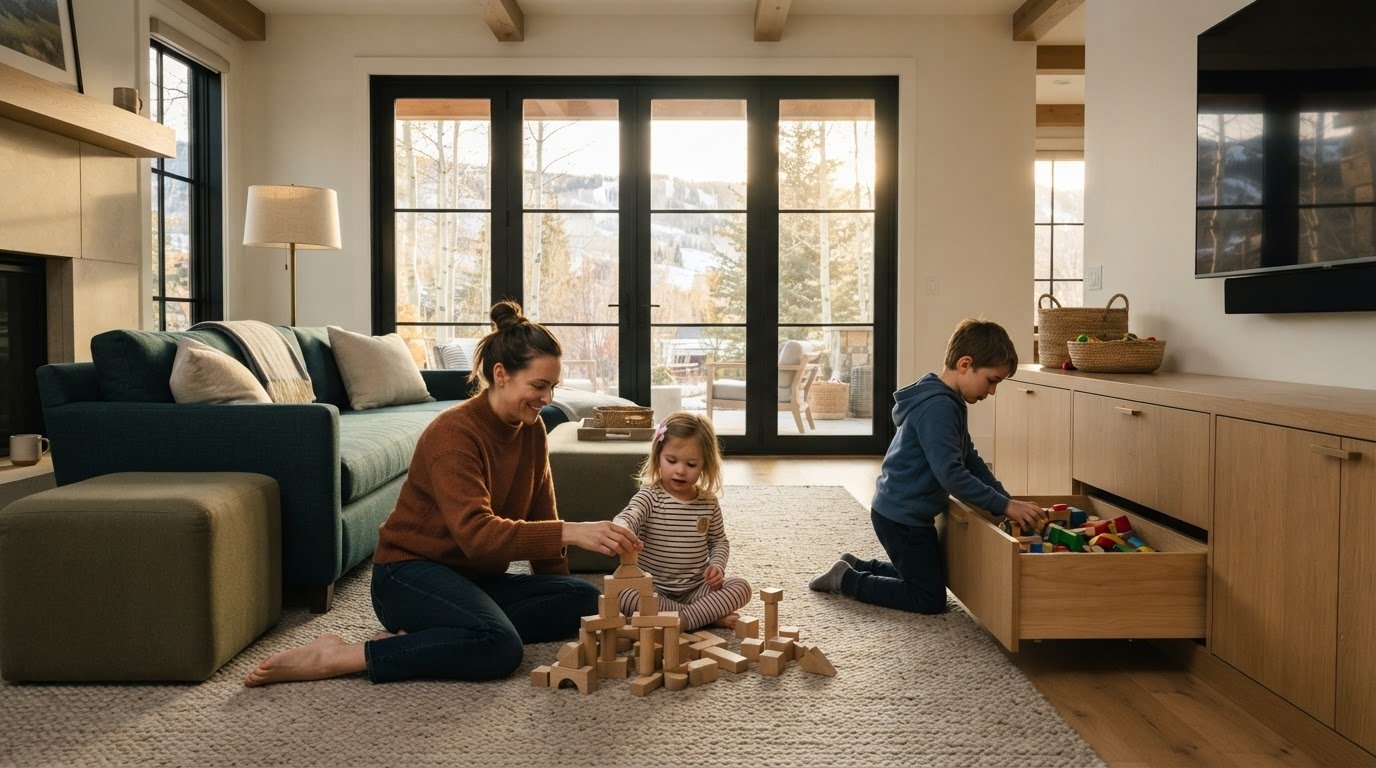
Luxury and family life can go together. Creating a family-friendly luxury living room means combining considered materials and comfortable seating with practical storage, flexible zones, and layered lighting. The result feels polished without asking everyday life to tiptoe around it.
It’s natural to want a beautiful room that can handle play, downtime, and the everyday messes of a busy home. Thoughtful choices make that balance possible: performance fabrics and washable covers can simplify care, while concealed storage keeps toys and games close at hand but out of sight. This guide covers durable finishes, adaptable layouts, and inviting places to sit, read, and play. It also explains how layered lighting can shift the mood from lively family time to a quieter evening while keeping the room cohesive and refined.
Key Takeaways
- Choose sofa upholstery and finishes that suit everyday use, then balance durability with a refined palette and texture.
- Use closed storage, baskets, or a storage ottoman to keep toys accessible while preserving a composed look.
- Arrange furniture to leave clear pathways and open sight lines, with flexible zones that can adapt as children’s needs change.
- Combine comfortable gathering spots with overhead, floor, and table lighting to shift the room’s mood throughout the day.
1. Want a home that feels elevated, and functions effortlessly?
Creating a family-friendly luxury living room starts with refined materials suited to daily use. Pair comfortable seating with easy-care surfaces and a cohesive palette, so the room welcomes children and pets without losing its polish.
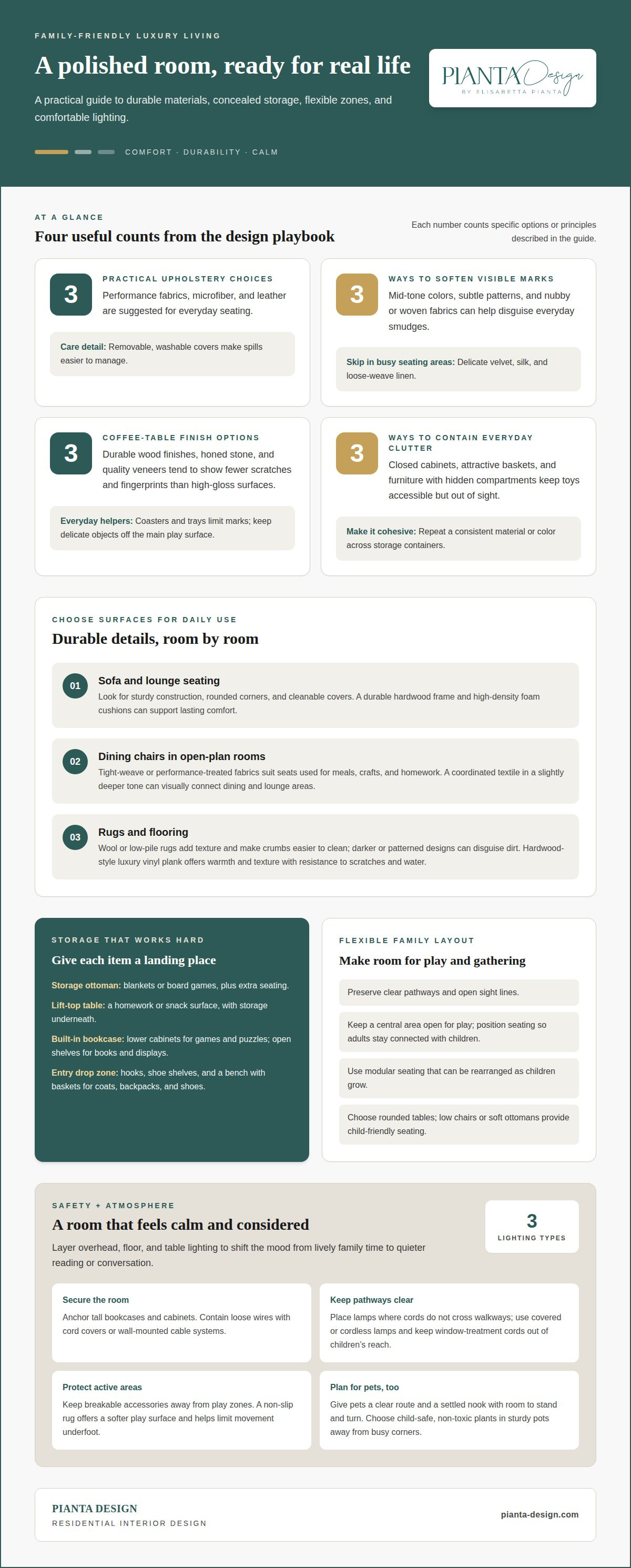
Start with the sofa, since it anchors the living space and sees regular traffic. Performance fabrics, microfiber, and leather are practical upholstery options; removable, washable covers make spills easier to manage. Mid-tone colors and subtle patterns help disguise everyday marks, while nubby or woven fabrics can make smudges less noticeable. For a sectional or recliner, prioritize sturdy construction, rounded corners, and covers that can be cleaned. A durable hardwood frame and high-density foam cushions can support lasting comfort. Avoid delicate velvet, silk, and loose-weave linen in the busiest seating areas.
Apply the same material principles to dining chairs in an open-plan room. Tight-weave or performance-treated fabrics can suit seating used for meals, crafts, and homework. Choose a coordinated textile in a slightly deeper tone than nearby upholstery, then add a washable accent for softness. The right fabric can also visually connect the dining and lounge areas.
Choose coffee-table finishes with everyday contact in mind. Durable wood finishes, honed stone, and quality veneers tend to show fewer scratches and fingerprints than high-gloss surfaces. Use coasters and trays to limit marks, and keep delicate objects away from the main play surface. Underfoot, wool or low-pile rugs add texture and make crumbs easier to clean; a darker or patterned design can disguise dirt. Hardwood-style luxury vinyl plank offers warmth and texture with resistance to scratches and water. Nearby, matte quartz provides a clean-looking, durable countertop surface.
2. Storage furniture for toys and household clutter
Stylish toy storage keeps everyday items accessible while helping the living room look composed. Closed cabinets, attractive baskets, and furniture with hidden compartments can contain toys, games, and puzzles without making the family room feel like a playroom.
Match storage to how each item is used. A storage ottoman beside the sofa can hold blankets or board games and provide extra seating on movie night. A lift-top table offers a surface for homework or snacks, with storage underneath. Tuck smaller items into baskets under a console or coffee table, or arrange baskets along a bookshelf. Choose a consistent material or color so containers feel intentional among the room’s accessories.
Closed storage is especially useful for toys that create visual clutter. Built-in bookcases can pair lower cabinets for games and puzzles with open shelves for books, framed photographs, or collected objects. A coffee table with a flat top and deep drawer can serve as a play surface while keeping smaller toys close by. In an awkward corner, a slim cabinet or storage bench can make use of the space without interrupting movement through the room.
Plan an entryway drop zone for the belongings that travel into the living space. Wall hooks, shoe shelves, and a bench with baskets give coats, backpacks, and shoes a clear place to land. Keep frequently used items within easy reach, and reserve higher shelves for pieces used less often. This distinction makes tidying simpler before guests arrive. For storage tailored to the room’s proportions and furniture, custom furniture design can integrate concealed compartments without adding visual bulk.
3. Flexible rooms that change with children’s needs
A functional living room can shift from open play space to family gathering area without losing its beautiful character. Furnishing costs depend on room dimensions, chosen furniture and materials, and which existing pieces remain; the price depends on the project and is provided after a quote request.
Begin with a layout that preserves clear pathways and open sight lines. A modular sectional can be rearranged as children grow, while low chairs or soft ottomans offer comfortable seating for children. Choose rounded coffee tables and oval side tables to soften sharp edges. Keep a central area open for play, and position seating so adults can stay connected with children nearby.
Let children contribute without making the room feel visually busy. Use a bookcase to display framed family pictures, small collections, and rotating children’s artwork. Designate a shelf or gallery area, then refresh the display as interests evolve. Lightweight canvas prints add color without glass, while washable cushions can introduce brighter accents to a calm palette.
Plan furniture and electronics placement with safety in mind. Secure tall bookcases and cabinets to reduce the risk of tipping, and use cord covers or wall-mounted cable systems to contain loose wires. Place lamps where cords won’t cross walkways, and keep breakable accessories away from active play zones. A non-slip rug can provide a softer play surface and help limit movement underfoot.
Pets need clear routes and a settled place of their own. A side-table hideaway can create a pet nook, with enough room for the animal to stand and turn. Choose child-safe, non-toxic plants in sturdy pots and keep them away from busy corners. Well-planned lighting illuminates pathways and play areas; adjustable lamps can also create a quieter setting for reading or family conversation.
The cost depends on the room’s dimensions, furniture and materials selected, and which existing pieces are kept; a price is provided after a quote request.
4. Comfortable seating and layered lighting
Choose covered or cordless lamps, and secure electrical cords away from children’s paths. Keep window-treatment operating cords out of children’s reach, and avoid loose cords near seating or play areas.
Comfort and style can share the same design language. A generous sofa creates a welcoming anchor, while a swivel chair can face the television or turn toward conversation. Add a rounded ottoman for flexible seating and a soft place to rest tired feet. For stains and everyday wear, choose cushions with removable covers and a subtle pattern that complements the room’s palette.
Create distinct places to read and lounge through furniture placement rather than adding more pieces. Set a comfortable chair beside a floor lamp, with a small table for books and a drink. Position the main sofa to encourage conversation, then leave room for poufs or oversized cushions that can move as family activities change. A rug can define the reading corner without enclosing it.
Layer lighting for different moments. An overhead fixture provides general illumination, while a floor lamp beside the reading chair directs light where it’s useful. Table lamps add a softer glow near the sofa, and dimmers help shift the atmosphere from lively play to evening relaxation. Keep controls accessible to adults and position lamps clear of pathways.
Small details can make daily use easier. Choose soft-glow lamps for wind-down time, and secure cords along walls or behind furniture. A cordless lamp reduces loose wires around a low side table. Use lightweight, washable throws for movie nights, and arrange flexible seating so children and adults can gather comfortably without crowding walkways.
For a cohesive plan that balances seating, ambience, and practical lighting, explore lighting design for family living.
Pianta Design: Residential Interior Design
Pianta Design brings refined design and everyday function together in family living rooms. Its Residential Interior Design service is a natural next step when you’re planning a full-room transformation or want expert guidance to coordinate storage, seating, materials, and lighting. The team can develop the space from concept and planning through procurement and project management.
For a room with unusual dimensions or specific family routines, Space Planning can help define circulation and activity zones, while Custom Furniture Design can shape pieces around the room’s needs. The process can include mood boards, floor plans, and 3D visualizations for your approval, helping you consider the design before it takes form.
Ready to create a living room that feels considered and works for your household? Contact Pianta Design to discuss your project.
Shape a living room around the life you live
Enduring rooms begin with an honest picture of daily life: where family gathers, what needs to stay close, and how the space should feel at day’s end. Let those priorities guide the process of creating a family-friendly luxury living room, so each design decision supports both the atmosphere and the people who share it.
Before making changes, note what feels awkward in the room today. Perhaps toys collect near the sofa, the reading corner feels dim, or furniture interrupts an easy route across the space. Turn these observations into a clear design brief, so the finished room reflects your household rather than a passing trend.
Pianta Design can translate those priorities into a cohesive residential interior. Its design process brings the room’s layout, finishes, and details together to create a setting that feels personal and comfortable over time.
To begin shaping a living room around your family’s routines and aesthetic, contact Pianta Design. A thoughtful next step can make the space feel more distinctly yours.
Frequently Asked Questions
Want a home that feels elevated and functions effortlessly?
Unite visual refinement with choices that support your household’s routines. A composed palette, tactile materials, and carefully placed lighting give the room a luxurious character, while a clear route between the sofa, play area, and doorway makes daily movement easier. Notice where family life already gathers, then let that pattern guide the arrangement.
What durable, stain-resistant fabrics are best for a luxury family living room?
Performance fabrics, microfiber, and leather are useful options for family seating. Tight-weave or nubby upholstery can make small marks less conspicuous, while mid-tone colors and subtle patterns help disguise everyday wear. Compare fabric texture and color with the room’s rug and natural light, then choose upholstery suited to how the sofa will be used.
Which kid-friendly luxury sofas offer removable, washable covers?
Look for sofa descriptions that state whether cushion covers are removable and washable. Check the stated care instructions rather than assuming a particular style or price makes cleaning easier. A relaxed sofa with deep seating can suit family lounging; coordinate its cover with washable pillows for a polished arrangement.
What is the best family-friendly living room layout for conversation and play?
Arrange the main sofa and chairs to face one another, with a shared surface within easy reach. Keep the center or one side of the room open for play, and leave a clear route between the entrance and adjoining spaces. In an open-plan home, orient seating toward the family room while preserving sight lines to nearby activity.
How can you childproof a luxury living room without sacrificing style?
Choose safety measures that blend into the room’s visual language. Secure tall bookcases and cabinets, conceal exposed electronics cords, and place fragile accessories on higher shelves. Lightweight canvas art can replace glass-fronted pieces in active areas. For a considered finish, match cord covers and storage details to nearby wall or furniture tones rather than adding conspicuous contrasts.
What coffee tables and furniture are safest for homes with young children?
Rounded coffee tables, oval side tables, and soft ottomans reduce sharp edges around active play. Avoid glass coffee tables, and favor sturdy furniture that feels secure in place. An upholstered ottoman offers flexible seating with a softer profile. Keep table decor simple, with delicate objects outside children’s usual reach.
